
Finding Quality Bearded Dragon Breeders Nearby: Your Complete Guide to Reputable Local Sources

Picture this: you’ve decided to welcome a bearded dragon into your family, but you’re overwhelmed by the countless options available online and locally. The difference between a healthy, well-bred dragon from a reputable source and one from a questionable breeder can mean years of joy versus costly veterinary bills and heartbreak. When searching for bearded dragon breeders nearby, the quality of your source will directly impact your pet’s health, temperament, and longevity.
I’ve spent over a decade in the reptile community, and I can tell you that finding the right breeder is one of the most crucial decisions you’ll make as a bearded dragon owner. The reptile industry has grown exponentially, but unfortunately, not all breeders prioritize animal welfare over profit. This comprehensive guide will help you navigate the world of local bearded dragon breeding, ensuring you find a healthy, genetically sound companion from a breeder who truly cares about their animals.
Key Takeaways
• Research thoroughly before visiting – Reputable bearded dragon breeders nearby will have established reputations, health guarantees, and transparent breeding practices
• Avoid chain pet stores – Local specialized breeders typically provide healthier animals with better genetic backgrounds than large retail chains
• Expect to pay $100-500+ – Quality bred dragons with proven genetics cost more upfront but save money on veterinary bills long-term
• Ask detailed questions – Professional breeders welcome inquiries about genetics, health testing, and breeding practices
• Visit in person when possible – Seeing the breeding facility firsthand reveals important information about animal care standards
Understanding the Importance of Choosing Reputable Bearded Dragon Breeders Nearby
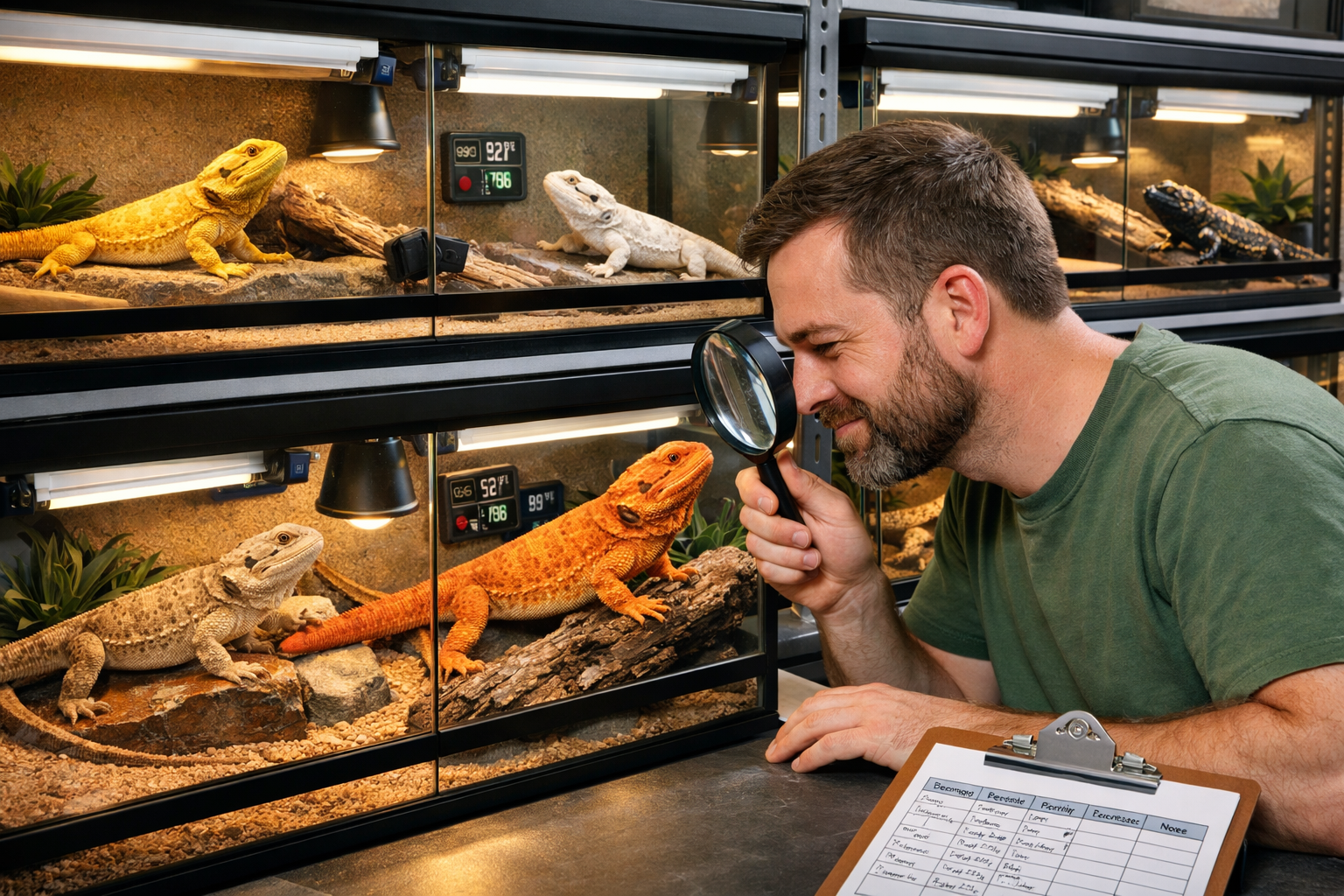
When I first started keeping bearded dragons in the early 2000s, the breeding community was much smaller and more tightly knit. Today’s expanded market means more options but also more potential pitfalls for unsuspecting buyers. Bearded dragon breeders nearby offer distinct advantages over distant online sources, primarily the ability to visit facilities and meet breeders face-to-face.
Why Local Breeders Matter
Local breeders provide several key benefits that distant suppliers simply cannot match. First, you can physically inspect the breeding facility and observe animal care standards firsthand. I’ve visited breeding operations ranging from pristine, professional setups to concerning backyard operations masquerading as legitimate businesses. The difference is immediately apparent when you see the animals’ living conditions.
Transparency becomes evident when you can ask questions directly and observe how breeders interact with their animals. Reputable local breeders are proud to show their facilities and discuss their breeding programs in detail. They’ll explain genetic lineages, health testing protocols, and feeding regimens without hesitation.
Ongoing support represents another crucial advantage of working with bearded dragon breeders nearby. Dachiu Dragons, for example, has built a reputation for “excellent lifelong customer phone support,” according to industry sources.[1] This type of relationship proves invaluable when you encounter care questions or concerns months after purchase.
Red Flags to Avoid
Unfortunately, the popularity of bearded dragons has attracted some less scrupulous operators. Avoid breeders who use buzzwords like “fancy” or “pygmy” without scientific backing, as these often indicate poor genetics and questionable husbandry practices.[1] Similarly, be wary of operations that cannot provide detailed genetic information about their breeding stock.
Large chain stores like Petco and PetSmart should generally be avoided due to poor husbandry standards and unknown genetic backgrounds.[1] These retailers often source animals from large-scale commercial breeding operations where individual animal welfare takes a backseat to volume production.
Unrealistic pricing can signal problems in either direction. Extremely cheap dragons often come from poor breeding conditions or carry genetic issues, while artificially inflated prices don’t always correlate with quality. Expect to pay between $99.99 for basic morphs to $499+ for rare color variations from reputable sources.
The Role of Genetics in Bearded Dragon Breeding
Understanding basic genetics helps you evaluate breeder quality and make informed decisions. Reputable breeders maintain detailed records of their breeding stock, including genetic lineages, health histories, and morph development. They can explain how specific traits are inherited and discuss the breeding goals behind particular pairings.
Morph development requires careful genetic planning over multiple generations. Established breeders like Atomic Lizard Ranch, operating since 1991, have developed unique morphs like the Red Gala Phase (2011) and Citrus phase (1998) through decades of selective breeding.[2] This type of genetic development requires extensive knowledge and long-term commitment that casual breeders simply cannot provide.
Health considerations in genetics extend beyond visible traits. Responsible breeders screen for genetic conditions, avoid inbreeding, and maintain genetic diversity within their breeding programs. When evaluating bearded dragon breeders, ask about their approach to genetic health and diversity.
- Display 9 Products per page
How to Research and Identify Quality Bearded Dragon Breeders Nearby
The digital age has transformed how we research and connect with reptile breeders, but it’s also created new challenges in separating legitimate operations from questionable sources. My approach to finding quality bearded dragon breeders nearby combines online research with in-person evaluation to ensure the best possible outcome.
Online Research Strategies
Start with specialized reptile platforms rather than general classified sites. MorphMarket has become the industry standard for reptile sales, featuring breeder profiles, customer reviews, and detailed animal listings. Dragon’s Den Herpetoculture, operated by Kevin Dunne in San Diego, CA, exemplifies how professional breeders use these platforms to showcase their work.[4]
Review breeding facility websites thoroughly. Established operations typically maintain comprehensive websites featuring facility tours, breeding philosophy, available animals, and care information. Look for breeders who share educational content, as this demonstrates genuine passion for the hobby rather than pure profit motivation.
Social media presence can reveal valuable insights about breeding operations. Follow potential breeders on Instagram and Facebook to observe their daily operations, animal care practices, and community interactions. Active, educational social media presence often correlates with passionate, knowledgeable breeders.
Evaluating Breeder Credentials
Experience matters significantly in reptile breeding. Atomic Lizard Ranch’s 30+ year history since 1991 demonstrates the type of long-term commitment that produces exceptional animals.[2] While newer breeders can certainly be excellent, established operations have proven track records and refined breeding programs.
Professional affiliations indicate serious commitment to the hobby. Look for breeders who participate in reptile shows, belong to herpetological societies, or contribute to reptile publications. These activities demonstrate ongoing education and community involvement.
Customer testimonials and reviews provide crucial insights into breeder reliability. CB Reptile, for example, receives “fairly consistent and positive reviews” as an online shipper, according to industry sources.[1] However, be aware that some reviews can be manipulated, so look for detailed, specific feedback rather than generic praise.
Questions to Ask Potential Breeders
Genetic background inquiries should be your starting point. Ask about the lineage of available animals, including information about parents, grandparents, and any known genetic issues. Reputable breeders maintain detailed records and can discuss breeding decisions intelligently.
Health protocols deserve thorough discussion. Inquire about quarantine procedures, veterinary care, parasite testing, and health guarantees. Professional breeders typically offer health guarantees and can provide veterinary contact information.
Care and husbandry questions reveal breeder knowledge and commitment. Ask about feeding schedules, supplementation, lighting requirements, and temperature management. Knowledgeable breeders enjoy discussing these topics and often provide detailed care sheets.
Understanding Pricing and Value
Price ranges vary significantly based on morph, age, and breeder reputation. Basic morphs typically start around $99.99 for baby bearded dragons, while rare color morphs can command $499 or more.[6] Remember that initial cost represents only a fraction of lifetime expenses.
Shipping considerations add approximately $50 to purchases from distant breeders, depending on dragon size and shipping distance.[1] Local purchases eliminate shipping stress and costs while allowing personal pickup and breeder interaction.
Value assessment should consider total cost of ownership rather than just initial price. A healthy dragon from a reputable breeder may cost more initially but typically requires fewer veterinary interventions throughout its life. Where to buy a bearded dragon becomes a question of long-term value rather than immediate savings.
Popular Bearded Dragon Morphs Available from Local Breeders
The explosion of bearded dragon color morphs over the past two decades has created an exciting but sometimes confusing marketplace for prospective owners. Understanding the most popular morphs available from bearded dragon breeders nearby helps you make informed decisions about which type best suits your preferences and budget.
Classic and Foundational Morphs
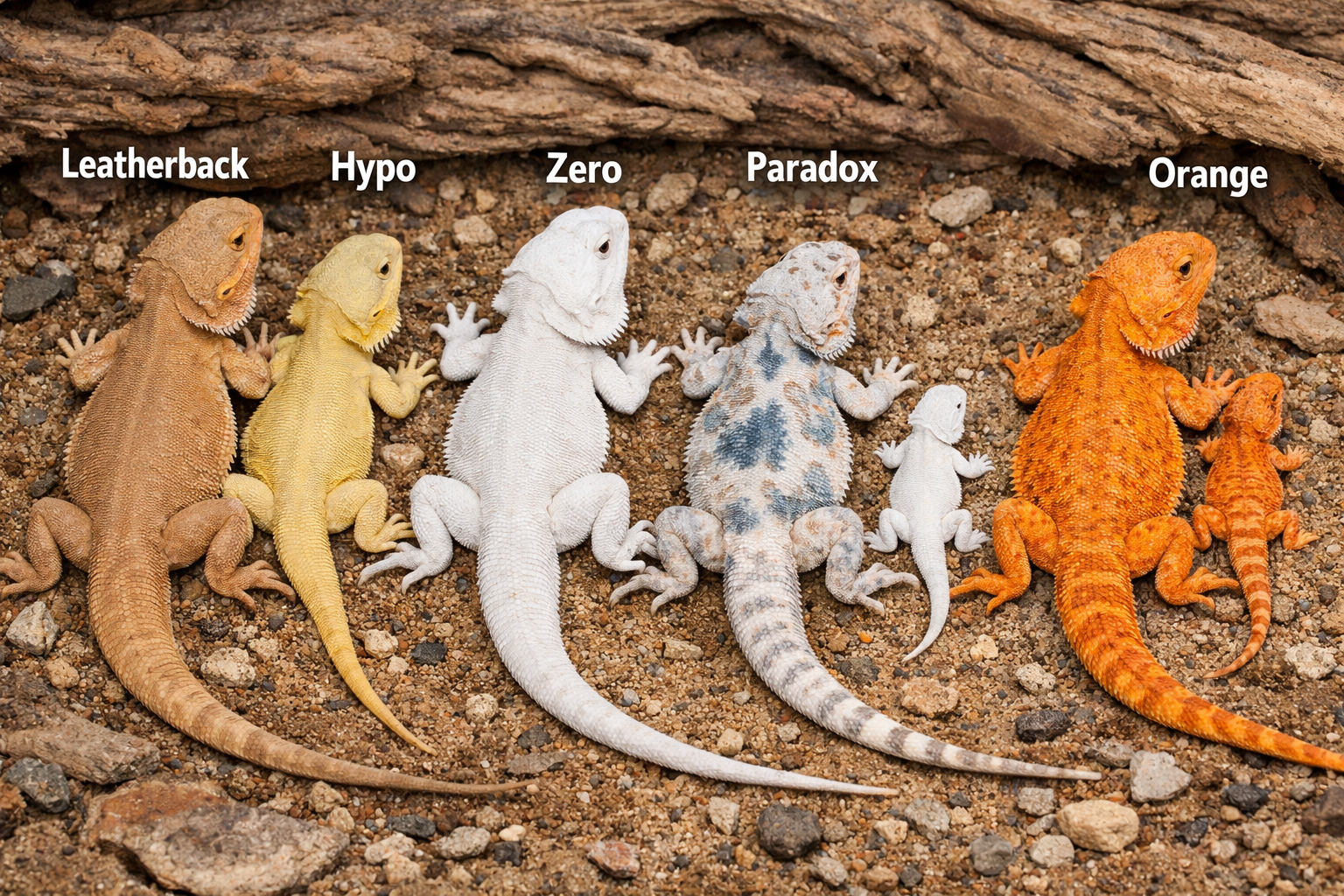
Leatherback bearded dragons represent one of the most popular morphs among both beginners and experienced keepers. These dragons feature reduced scale size, creating a smoother, more leather-like appearance that many find appealing. Leatherback bearded dragons typically display enhanced color intensity due to their modified scale structure, making other genetic traits more visually prominent.
Hypo (hypomelanistic) bearded dragons show reduced black pigmentation, resulting in cleaner, brighter colors throughout their bodies. The hypo bearded dragon morph serves as a foundation for many complex combinations, as the reduced melanin allows other colors to show more vividly. Prices for quality hypo specimens typically range from $150-300 depending on additional traits.
Translucent bearded dragons possess a genetic trait that affects scale transparency, creating unique visual effects especially visible in their spikes and nail beds. This morph often produces dragons with solid black eyes, a highly sought-after characteristic among collectors.
High-End Color Morphs
Zero bearded dragons represent the pinnacle of pattern reduction, displaying minimal to no pattern with clean, solid coloration. Zero bearded dragons command premium prices due to their striking appearance and the genetic complexity required to produce them consistently. Quality zeros from reputable breeders typically start around $400-500.
Paradox bearded dragons showcase random patches of color that don’t follow normal genetic patterns, creating unique, one-of-a-kind appearances. The paradox bearded dragon morph cannot be reliably reproduced, making each specimen truly unique. These dragons often command high prices due to their rarity and visual impact.
Witblit bearded dragons display a distinctive white and black pattern that creates stunning contrast. Witblit bearded dragons originated from specific genetic lines and require careful breeding to maintain pattern quality. This morph has gained popularity among collectors seeking unique pattern expressions.
Color-Specific Morphs
Orange bearded dragons showcase vibrant orange coloration that can range from subtle highlights to intense, full-body coverage. Orange bearded dragons often display their best coloration as adults, with colors intensifying over time with proper care and diet.
Red bearded dragons represent some of the most sought-after color morphs, displaying deep red hues that can appear almost burgundy in exceptional specimens. Red bearded dragons typically command premium prices due to the genetic complexity required to achieve intense red coloration.
Yellow bearded dragons offer bright, cheerful coloration that appeals to many keepers. Yellow bearded dragons can range from pale, lemony hues to deep, golden tones depending on their genetic background and care.
Combination Morphs
Hypo Paradox combinations represent some of the most expensive and visually striking bearded dragons available. Hypo paradox bearded dragons combine the clean colors of the hypo trait with random paradox markings, creating truly spectacular specimens that can command $600-1000+ from top breeders.
Trans (translucent) combinations with other morphs create unique visual effects and eye colors. Trans zeros, trans hypos, and other combinations offer collectors opportunities to own dragons with multiple desirable traits.
Age and Size Considerations
Baby bearded dragons (typically 4-6 inches) offer the lowest initial cost but require more intensive care during their rapid growth phase. Many morphs don’t display their full potential until maturity, making baby purchases somewhat speculative regarding final appearance.
Juvenile bearded dragons (6-12 inches) provide a middle ground between cost and development, often showing enough morph characteristics to predict adult appearance while remaining more affordable than adults. Juvenile bearded dragons represent excellent value for many buyers.
Adult bearded dragons (15+ inches) display their full genetic potential but command premium prices. Adult bearded dragons from quality breeding programs offer immediate gratification for collectors seeking specific visual traits.
- Display 9 Products per page
What to Look for When Visiting Bearded Dragon Breeders Nearby
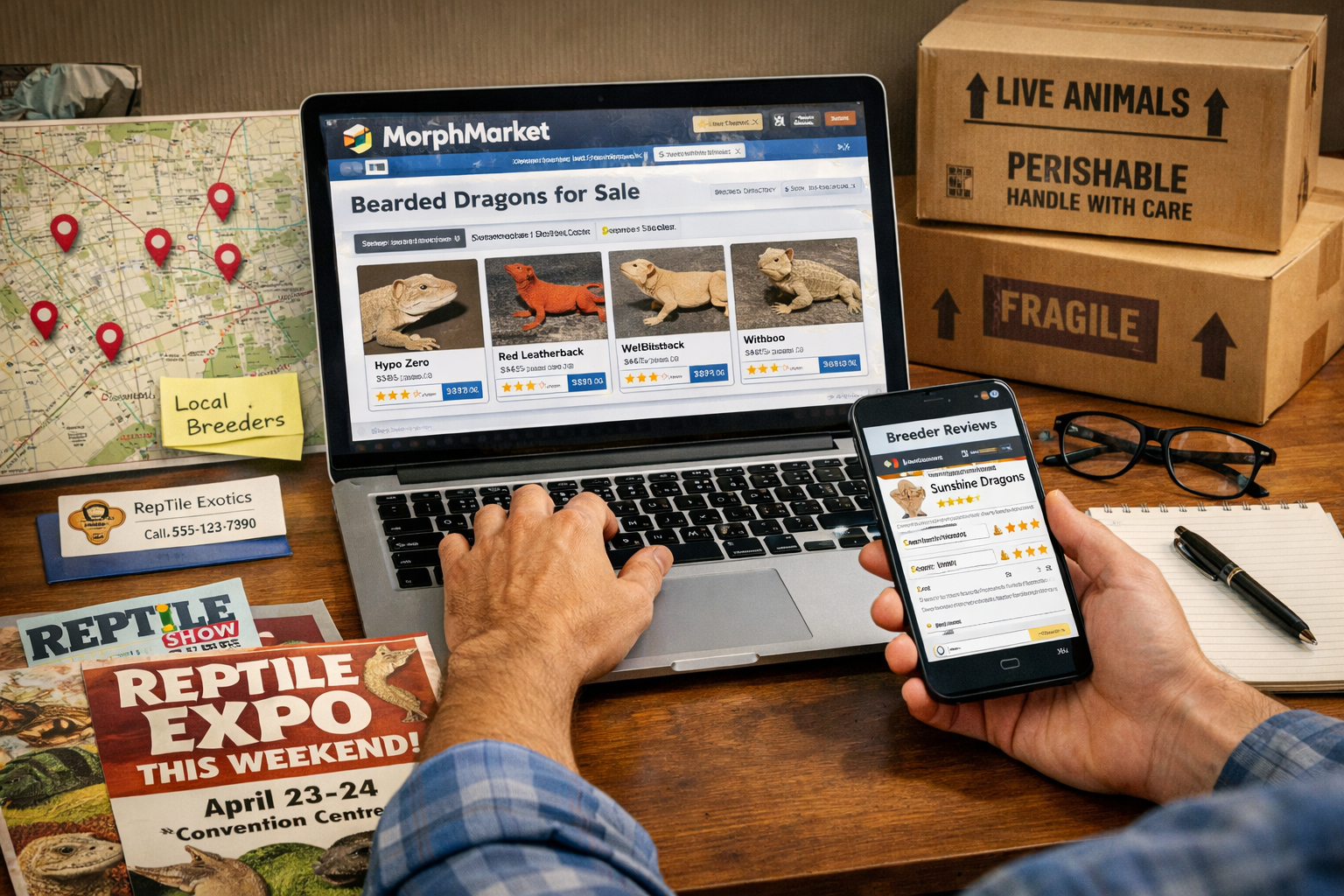
Visiting breeding facilities in person provides invaluable insights that online research simply cannot match. After decades of evaluating reptile breeding operations, I’ve developed a systematic approach to assessing bearded dragon breeders nearby that helps ensure you’re working with ethical, knowledgeable professionals who prioritize animal welfare.
Facility Cleanliness and Organization
Cleanliness standards immediately reveal a breeder’s commitment to animal health. Professional breeding facilities maintain spotless enclosures with fresh water, clean substrates, and organized feeding schedules. Look for facilities where you could comfortably spend time without being overwhelmed by odors or unsanitary conditions.
Enclosure design should reflect current best practices for bearded dragon husbandry. Each enclosure should provide appropriate basking spots, UVB lighting, hiding places, and adequate space for the animals housed within. Overcrowded conditions or inadequate lighting setups indicate corners being cut that could affect animal health.
Record keeping systems demonstrate professional operation management. Quality breeders maintain detailed records of feeding schedules, breeding dates, health observations, and genetic lineages. These records should be easily accessible and well-organized, indicating systematic approach to breeding management.
Animal Health and Behavior Assessment
Physical appearance of breeding stock provides crucial insights into overall facility quality. Healthy bearded dragons should display bright, alert eyes; clean, well-formed limbs; and appropriate body weight for their age. Avoid breeders whose animals show signs of metabolic bone disease, respiratory infections, or parasitic infestations.
Behavioral observations reveal important information about animal welfare and socialization. Well-cared-for bearded dragons typically display calm, alert behavior when approached by familiar handlers. Excessive stress responses, aggressive behavior, or lethargy can indicate poor husbandry or health issues.
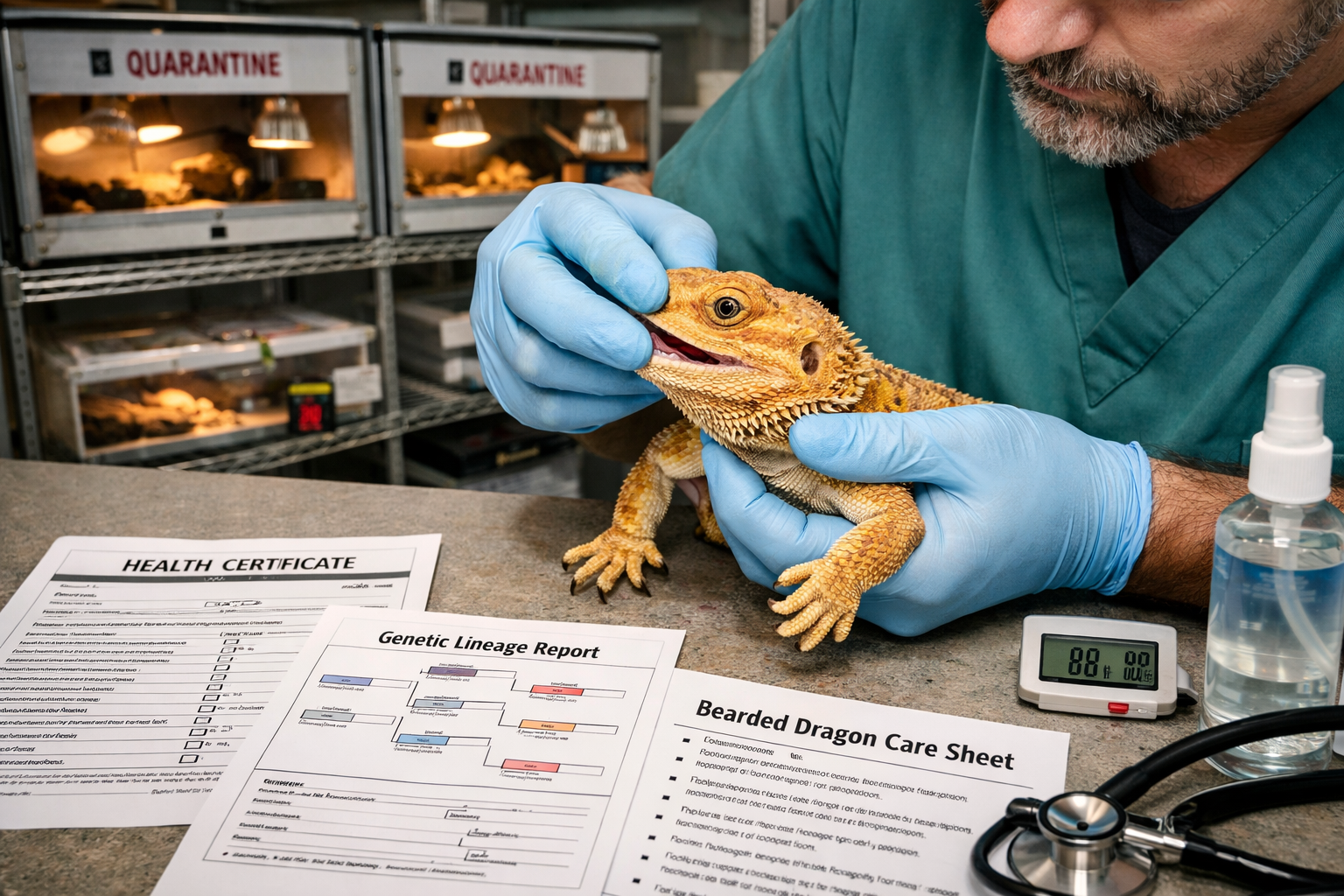
Quarantine protocols should be clearly established and followed. Professional breeders maintain separate areas for new arrivals, breeding animals, and animals available for sale. This separation prevents disease transmission and allows for proper health monitoring.
Breeder Knowledge and Communication
Technical expertise becomes apparent through detailed discussions about genetics, husbandry, and breeding goals. Knowledgeable breeders can explain complex genetic interactions, discuss the development of specific morphs, and provide detailed care recommendations tailored to individual animals.
Breeding philosophy reveals important information about priorities and goals. Ethical breeders focus on improving genetic health, developing desirable traits responsibly, and producing animals that will thrive in captivity. Avoid breeders who prioritize quantity over quality or seem motivated purely by profit.
Customer support commitment should extend well beyond the initial sale. Quality breeders like Dachiu Dragons have built reputations for “excellent lifelong customer phone support,” providing ongoing assistance as animals mature and care needs evolve.[1]
Health Guarantees and Documentation
Health guarantee terms should be clearly explained and documented in writing. Reputable breeders typically offer guarantees covering genetic defects, shipping mortality, and initial health issues. These guarantees demonstrate confidence in their breeding programs and commitment to customer satisfaction.
Veterinary relationships indicate professional approach to animal health management. Quality breeders maintain relationships with reptile-experienced veterinarians and can provide veterinary contact information for reference. They should also be able to discuss any health testing performed on their breeding stock.
Documentation provided should include care sheets, genetic information, and health records where applicable. Professional breeders provide comprehensive care information to help ensure successful transitions to new homes.
Pricing Transparency and Value Assessment
Pricing structure should be clearly explained and justified based on genetic quality, morph rarity, and breeding investment. While prices vary significantly based on morphs and quality, they should reflect reasonable market values rather than arbitrary inflation.
Payment policies should be professional and clearly stated. Most reputable breeders accept multiple payment methods and can provide proper receipts for purchases. Be cautious of operations that only accept cash or seem evasive about payment documentation.
Value proposition extends beyond initial cost to include ongoing support, health guarantees, and genetic quality. A slightly higher initial investment in a quality animal from a reputable breeder often proves more economical long-term than cheaper alternatives that may require extensive veterinary care.
Red Flags During Facility Visits
Evasive behavior from breeders should raise immediate concerns. Professional breeders are proud of their facilities and eager to discuss their animals and breeding programs. Reluctance to show breeding areas, answer questions, or provide references indicates potential problems.
Overcrowded conditions suggest prioritizing quantity over quality. While breeding operations naturally house multiple animals, each should have adequate space, proper environmental conditions, and individual attention as needed.
Inconsistent information between online presence and facility reality indicates potential deception. The animals, facilities, and breeding practices you observe should match the representation provided through websites, social media, and initial communications.
🏠 Facility Conditions
- Clean, odor-free environment
- Proper UVB lighting in all enclosures
- Appropriate enclosure sizes for animals
- Organized record-keeping system visible
- Separate quarantine areas maintained
🦎 Animal Health & Behavior
- Animals appear alert and healthy
- No visible signs of illness or deformity
- Dragons show calm behavior when handled
- Appropriate body weight for age/size
- Clean eyes, nose, and vent areas
👨🔬 Breeder Knowledge & Ethics
- Can explain genetics and breeding goals
- Provides detailed care information
- Offers health guarantee and support
- Has established reputation/references
- Asks questions about your setup/experience
📋 Documentation & Business Practices
- Provides written health guarantee
- Transparent pricing and policies
- Proper receipts and documentation
- Veterinary contact information available
- Professional website/online presence
Building Long-Term Relationships with Bearded Dragon Breeders Nearby
The relationship between reptile enthusiasts and quality breeders extends far beyond a single transaction. Throughout my years in the hobby, I’ve discovered that the most successful bearded dragon owners develop ongoing relationships with bearded dragon breeders nearby, creating networks of support that benefit both parties for years to come.
The Value of Ongoing Breeder Support
Lifetime guidance represents one of the most valuable aspects of working with established local breeders. Unlike online retailers who disappear after shipping, quality breeders remain available to answer questions about feeding changes, behavioral concerns, breeding potential, and health issues that may arise throughout your dragon’s 10-15 year lifespan.
Breeding consultation services become invaluable if you decide to breed your dragons in the future. Experienced breeders can provide guidance on genetic compatibility, breeding timing, incubation techniques, and hatchling care. This knowledge transfer helps maintain quality standards within the local reptile community.
Priority access to new morphs often comes with established breeder relationships. When exceptional animals become available or new genetic combinations are produced, loyal customers typically receive first consideration. This access can be particularly valuable for rare morphs that sell quickly upon release.
Establishing Professional Relationships
Communication preferences should be established early in your relationship. Some breeders prefer phone calls for complex discussions, while others respond better to detailed emails. Dachiu Dragons, for example, has built a reputation for “excellent lifelong customer phone support,” indicating their preferred communication method.[1]
Respect for breeding schedules demonstrates professionalism and consideration. Quality breeders operate on seasonal cycles tied to natural breeding patterns. Understanding these cycles and planning purchases accordingly shows respect for the breeder’s time and the animals’ welfare.
Referral opportunities can strengthen relationships while helping the broader reptile community. When you encounter other enthusiasts seeking quality animals, referring them to your trusted breeders creates goodwill and supports ethical breeding practices.
Contributing to the Breeding Community
Feedback provision helps breeders improve their programs and track animal development over time. Sharing photos, growth updates, and behavioral observations provides valuable data that can influence future breeding decisions and care recommendations.
Educational participation in local reptile shows, club meetings, and online forums helps build community connections. Many successful long-term relationships develop through shared participation in reptile-focused activities and educational events.
Genetic contribution through future breeding can create exciting collaboration opportunities. If your dragons develop exceptional traits or prove particularly successful breeders, established relationships may lead to collaborative breeding projects that benefit both parties.
Planning for Future Purchases
Collection development strategies benefit from breeder input and planning. Rather than making impulse purchases, work with trusted breeders to develop acquisition plans that complement your existing animals and achieve specific collection goals.
Budget planning for future purchases allows you to secure exceptional animals when they become available. Quality breeders often announce upcoming breeding projects months in advance, allowing committed customers to reserve animals before they’re produced.
Space and resource planning should consider future growth potential. Discuss your long-term goals with breeders to ensure your facility development keeps pace with your collection aspirations.
Supporting Ethical Breeding Practices
Word-of-mouth promotion represents the most valuable marketing for quality breeders. Sharing positive experiences through social media, forums, and personal recommendations helps ethical breeders succeed while steering potential customers away from questionable operations.
Educational advocacy helps improve overall industry standards. Support breeders who prioritize education, genetic health, and animal welfare by promoting their educational content and breeding philosophy within the reptile community.
Quality standards maintenance benefits everyone in the hobby. By consistently choosing quality over convenience or price, you help maintain market demand for ethical breeding practices while discouraging puppy mill-style operations.
Navigating Challenges and Conflicts
Problem resolution should follow established communication channels and maintain professional courtesy. If issues arise with purchased animals or breeder services, approach resolution constructively while documenting concerns appropriately.
Expectation management prevents many conflicts before they develop. Clear communication about animal characteristics, delivery timelines, and guarantee terms helps ensure both parties understand their responsibilities and expectations.
Community mediation through reptile organizations or experienced hobbyists can help resolve serious conflicts while maintaining community relationships. Most reputable breeders want to maintain positive reputations and will work to resolve legitimate concerns.
- Display 9 Products per page
Conclusion
Finding quality bearded dragon breeders nearby requires patience, research, and careful evaluation, but the investment pays dividends throughout your dragon’s lifetime. The difference between a healthy, well-bred dragon from a reputable source and one from a questionable breeder extends far beyond initial cost considerations—it affects your pet’s health, temperament, genetic potential, and your overall experience as a reptile keeper.
Throughout this comprehensive guide, we’ve explored the essential elements of identifying and working with ethical breeders who prioritize animal welfare over profit. From understanding the importance of genetic health and proper husbandry to recognizing red flags that indicate problematic operations, these insights will help you navigate the complex world of bearded dragon breeding with confidence.
The reptile community continues to evolve, with new morphs, breeding techniques, and care standards developing regularly. By establishing relationships with knowledgeable, ethical breeders in your area, you gain access to this evolving knowledge base while supporting practices that benefit the entire hobby. Remember that reputable breeders welcome questions, provide ongoing support, and take pride in their facilities and animals.
As you begin your search for the perfect bearded dragon, prioritize breeders who demonstrate transparency, knowledge, and genuine passion for these remarkable reptiles. Whether you’re seeking a bearded dragon for sale as a first-time owner or adding to an established collection, the foundation of a positive experience lies in choosing the right breeder.
Take action today by researching local breeders in your area, visiting facilities when possible, and asking detailed questions about breeding practices and animal care. Your future bearded dragon—and your wallet—will thank you for the extra effort invested in finding a truly exceptional source for these captivating reptiles.
For those seeking the highest quality reptiles for sale with comprehensive support and health guarantees, consider exploring our extensive selection of captive-bred bearded dragons from verified, ethical breeders who share our commitment to animal welfare and customer satisfaction.
References
[3] Bearded Dragon Breeders Nearby – https://www.reptiles.com/bearded-dragon-breeders-nearby/
[4] List Of Breeders Please – https://www.beardeddragon.org/threads/list-of-breeders-please.271751/
[8] Breeders – https://creatures.com/directory/breeders?species=bearded-dragon&page=1